

Department of European Languages: A Global Vision of Language and Culture for Innovation and Development
1. Overview
• Background: Since 2020, the Department of European Languages has integrated the Russian, Spanish, French, and German programs of the School of Foreign Languages to form an independent academic unit. Designed to align with the evolving demands of globalization, the Department serves as a cross-linguistic, cross-cultural, and interdisciplinary educational platform. Our mission is to cultivate versatile professionals with a global perspective and intercultural communication skills, fostering mutual learning among civilizations and advancing international cooperation in service of national and social development.
• Disciplinary Development:
• 2018: The Master’s Program in Russian Language and Literature began enrolling students, gradually developing into a comprehensive language education system spanning multiple academic levels.
• 2020: The School of Foreign Languages was authorized to confer doctoral degrees in the First-level Discipline of Foreign Languages and Literatures, significantly enhancing research capacity and disciplinary depth of the Department.
• 2021: The Master’s Program in Spanish Language and Literature was established; student enrollment commenced in 2022.
• 2024: The undergraduate program in Russian was launched, further enriching the talent cultivation system.
2. Faculty
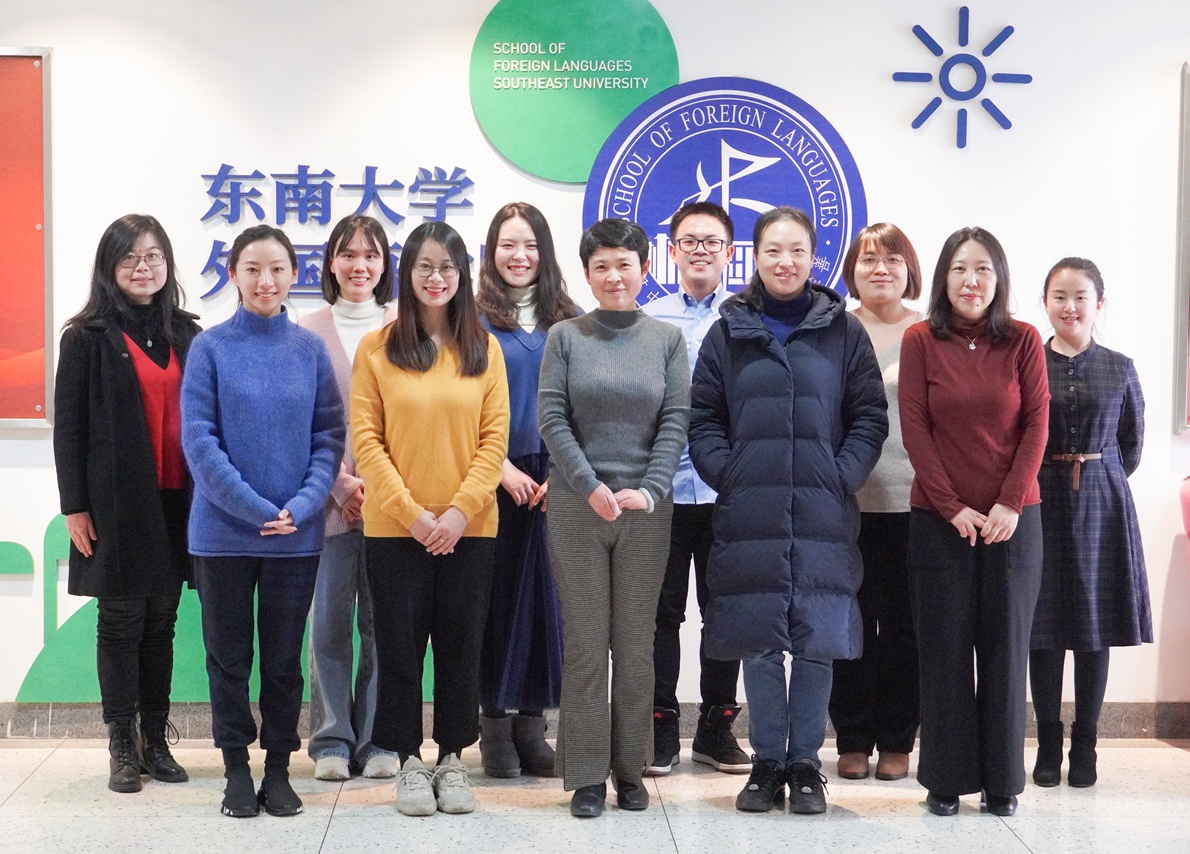
• A Dynamic Teaching Team: The Department currently has a vibrant team of 14 full-time faculty members, including 1 Professor, 4 Associate Professors, 4 recipients of the Jiangsu Province “Double Innovation” Doctoral Talent Program, 1 Distinguished Professor of Southeast University, and 4 Young Zhishan Scholars.
All faculty members have undertaken long-term study or research experience at renowned European universities or research institutions. In recent years, 8 faculty members have received awards in Southeast University’s Young Faculty Teaching Competitions, and 2 have been recognized as “Most Popular Teachers among Graduates” at Southeast University.
• Development and Support:
The Department fosters faculty development through the Senior-Junior Mentoring Model to improve teaching quality, complemented by regular teaching competitions, pedagogical reforms, and collaborative research initiatives.
3. Teaching and Talent Cultivation
• Curriculum System: We offer a multi-dimensional curriculum, including
• Undergraduate courses for the Russian major
• Master’s programs in Russian and Spanish Languages and Literatures
• Second foreign language courses for English majors
• Degree-level and elective foreign language courses for Master’s and Doctoral students
• Spanish and French courses for the SEU Innovative Practice Base for High-level International Talent Cultivation
• Abroad range of general education courses
• Small-Class Teaching: Beginning with the 2024 cohort, undergraduate students majoring in Russian benefit from a small-class, personalized teaching model, ensuring a solid linguistic foundation and optimized learning outcomes.
• Student Achievements: In recent years, students of the Department have achieved remarkable results in national competitions:
• Shang Xingyu (admitted in 2024, Russian major) won 3rd Prize in the National Russian Language Competition for College Students (Undergraduate Junior Group).
• Ren Xinzhu (admitted in 2022, Russian major) and Li Mingrui (admitted in 2024, Russian major) received Excellence Awards in the National Russian Language Competition for College Students (Postgraduate Group).
• Wang Fulin (admitted in 2022, Spanish major) won 2nd Prize for his paper at the National Graduate High-End Academic Forum on Foreign Languages and Literatures
• International Collaboration: The Department actively promotes international academic collaboration by inviting distinguished domestic and international scholars for lectures and co-teaching, facilitating global academic exchange for both faculty and students. The Russian Program has established inter-university and inter-school cooperative projects with leading institutions such as Lomonosov Moscow State University, Kazan Federal University, and Minsk State Linguistic University. International cooperation in Spanish Language and Literature is also progressing steadily. Several graduate students have received scholarships from the China Scholarship Council (CSC) to pursue further studies in Russia, Spain, and other countries.
4. Research Achievements
Since its establishment, the Department has been committed to research innovation and disciplinary advancement, achieving significant academic accomplishments.
Over the past three years, faculty members have been awarded 7 National Social Science Fund of China (NSSFC) programs (including 1 Key Project), covering Russian, Spanish, and French, and 1 provincial and ministerial level program.
Nearly 30 high-impact papers have been published in leading international journals and domestic CSSCI-indexed journals, addressing topics such as linguistics, translation studies, and intercultural communication.
The Department also actively engages in international academic exchange and collaboration, enhancing the global dissemination of its research achievements and making substantial contributions to disciplinary development and cultural exchanges.
5. Highlights
Interdisciplinary Integration – The “Russian+” Program: Leveraging SEU’s strategic advantage of “Strong Engineering, Distinctive Humanities”, the Department has launched a “Russian+” interdisciplinary initiative. This program provides students with a diversified knowledge structure, aligning with national strategic needs and enhancing professional competitiveness in a globalized job market.
6. Future Prospects
The Department of European Languages remains committed to broadening its disciplinary scope and enhancing educational quality through pedagogical reform. We strive to cultivate versatile language professionals with global perspectives and strong intercultural communication skills, enabling them to make significant contributions to international cooperation and cross-cultural understanding.