
Undergraduate Education: Cultivating Multilingual, Interdisciplinary Leaders in Foreign Languages for the New Era
01 English
The English program has been approved as a National First-class Undergraduate Program. It has also been selected for the First Batch of New Liberal Arts Research and Reform Practice Projects by the Ministry of Education, and designated as a Brand Program, Featured Program, and Key Program of Jiangsu province. In addition, it has been selected as a Typical Case for Curriculum-based Ideological and Political Education (Program) in Jiangsu Province.
The English Program was rated A in the 2021 ShanghaiRanking’s Ranking of Chinese Universities. More than 60% of its graduates pursue further study at top universities in China and abroad each year.
The English program aims to cultivate interdisciplinary leaders with strong national commitment, global perspectives, solid linguistic and cultural competence, and literacy in artificial intelligence. Students are expected to systematically study English language and literature as well as country and regional studies, while gaining familiarity with international rules and the operational mechanisms of international organizations. Furthermore, they are expected to develop strong cross-cultural communication skills, the ability to manage international affairs, and the capability to apply artificial intelligence technologies to complex tasks. They will be well prepared for careers in international organizations, foreign-related institutions, regional studies, international communication, and related fields.
02 Dual Bachelor's Degree Program in English + Information Engineering
As the first dual bachelor's degree program at Southeast University, the English + Information Engineering program marks a major breakthrough in integrating the university’s strengths in “Strong Engineering, Distinctive Humanities”. The program is supported by two primary-discipline doctoral programs as well as two national first-class undergraduate programs—Foreign Languages and Literatures and Information and Communication Engineering. By breaking traditional disciplinary boundaries, the program responds to national strategic needs and global competition by cultivating future leaders in the information sector with AI literacy, international competence, and the ability to contribute to international organizations and standards development.
This initiative represents an innovative exploration of university–industry collaboration under Southeast University’s strategy of strengthening the university through talent development. It also serves as a model for interdisciplinary integration across different schools and departments.
03 Japanese
The Japanese program is a National First-Class Undergraduate Program and a Brand Program in Jiangsu province. It was rated A in the 2021 ShanghaiRanking’s Ranking of Chinese Universities. Aligned with the New Liberal Arts initiative, the program adopts a cultivation model integrating language proficiency with disciplinary expertise. It aims to solidify students’ basic skills in listening, speaking, reading, writing, and translation, strengthen second foreign language learning, encourage the study of a third foreign language, and offer elective courses in International Law. Through this approach, the program fosters students’ interdisciplinary development, aiming to cultivate high-level English-Japanese bilingual talents with expertise in foreign-related legal affairs, a solid understanding of international rules and a strong commitment to serving national strategic needs.
Simultaneously, following the internationalization policies of the nation and Jiangsu Province, the Japanese program collaborates with prestigious Japanese universities such as the University of Tokyo, Osaka University, and Hokkaido University for joint international cultivation. Approximately 80% of undergraduates participate in exchange programs, while 100% of graduate students have opportunities to pursue overseas study. Tuition and miscellaneous fees are waived during the exchange period, and students are eligible to apply for national and university scholarships. As a result, around 60% of graduates pursue further study at top universities worldwide each year, demonstrating strong competitiveness in both academic advancement and career development.
04 Dual Bachelor’s Degree Program in Japanese + Electronic Science and Technology
The Japanese + Electronic Science and Technology program is jointly offered by the School of Foreign Languages and the School of Electronic Science and Engineering at Southeast University, with both schools collaborating closely in teaching and program management.
The program is supported by two primary-discipline doctoral programs and two national first-class undergraduate programs—Foreign Languages and Literatures and Electronic Science and Technology, while also leveraging high-quality international collaborations with renowned universities such as Waseda University and Osaka University.
The program aims to break traditional boundaries between the humanities and engineering disciplines and cultivate innovative interdisciplinary talents with strong foundations in both Japanese language and electronic science, excellent cross-cultural communication skills, global perspectives, and leadership potential. Guided by the talent cultivation philosophy featuring “solid foundations, broad knowledge, interdisciplinary integration, and strong innovation”, the program has established a comprehensive interdisciplinary training system. The curriculum covers core subjects including Japanese language skills, Japanese society and culture, electronic circuits, semiconductor physics, and so on. While ensuring a strong grounding in electronic science and technology, the program also enhances students’ cross-cultural communication abilities and their capacity to apply theoretical and technological approaches to solve technical and managerial challenges in the electronic information industry.
Graduates may pursue further study at leading universities in China, Japan, Europe, and the United States in fields such as foreign languages and electronic engineering. They may also enter careers in technology, research, technical translation, or technical management in electronics-related sectors.
05 Russian
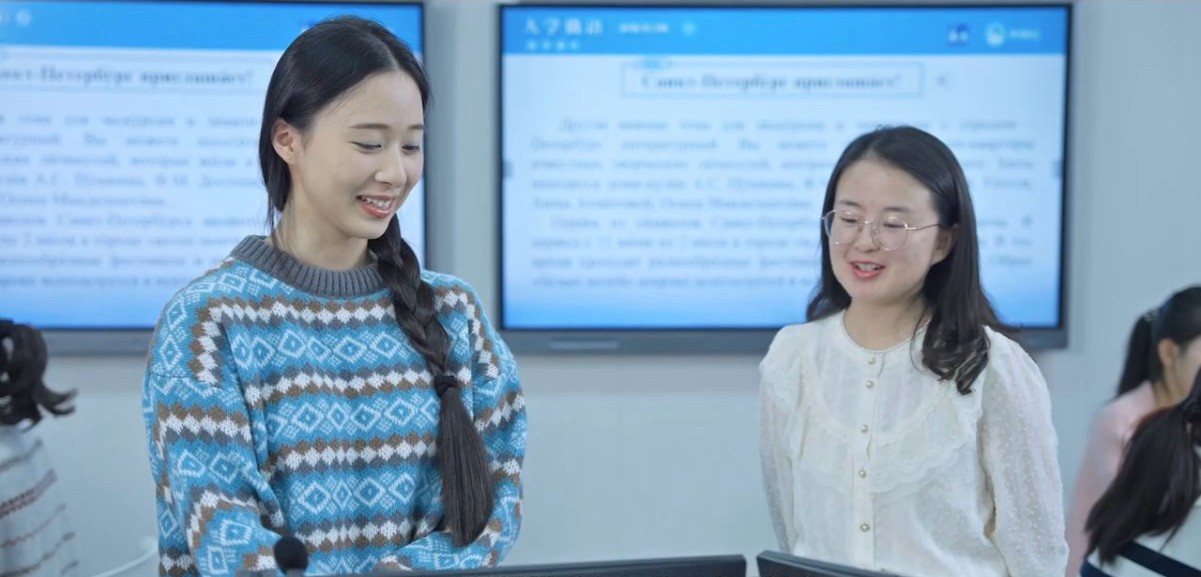
The Russian program features a faculty team, all of whom hold doctoral degrees, with 90% having studied in Russia for over a year.
By collaborating with world-renowned universities such as Minsk State Linguistic University, Moscow State University, and Kazan Federal University, and integrating Southeast University’s “Strong Engineering” advantages, the program is committed to cultivating interdisciplinary leaders with proficiency in Russian and solid engineering knowledge. Graduates are expected to conduct field research in Russia, Ukraine, Belarus, and Central Asian countries, and to be prepared for international careers in fields such as architecture, education, and the internet industry. The program adopts an internationalized cultivation model through cooperating with partner universities like Minsk State Linguistic University, Kazan Federal University, and Saint Petersburg State University for joint teaching and talent cultivation, which greatly enhances its competitiveness. In recent years, Russian program graduates have actively participated in the development of the Belt and Road Initiative, promoting economic cooperation and cultural exchange between China and Russia. Graduates who pursue further study are highly competitive in admission to postgraduate programs in Country and Regional Studies, Party History, International Relations, International Law, and International Trade. Both employment and academic prospects are highly promising.

Copyright © 2013 School of Foreign Languages, SEU ・ All Rights Reserved.